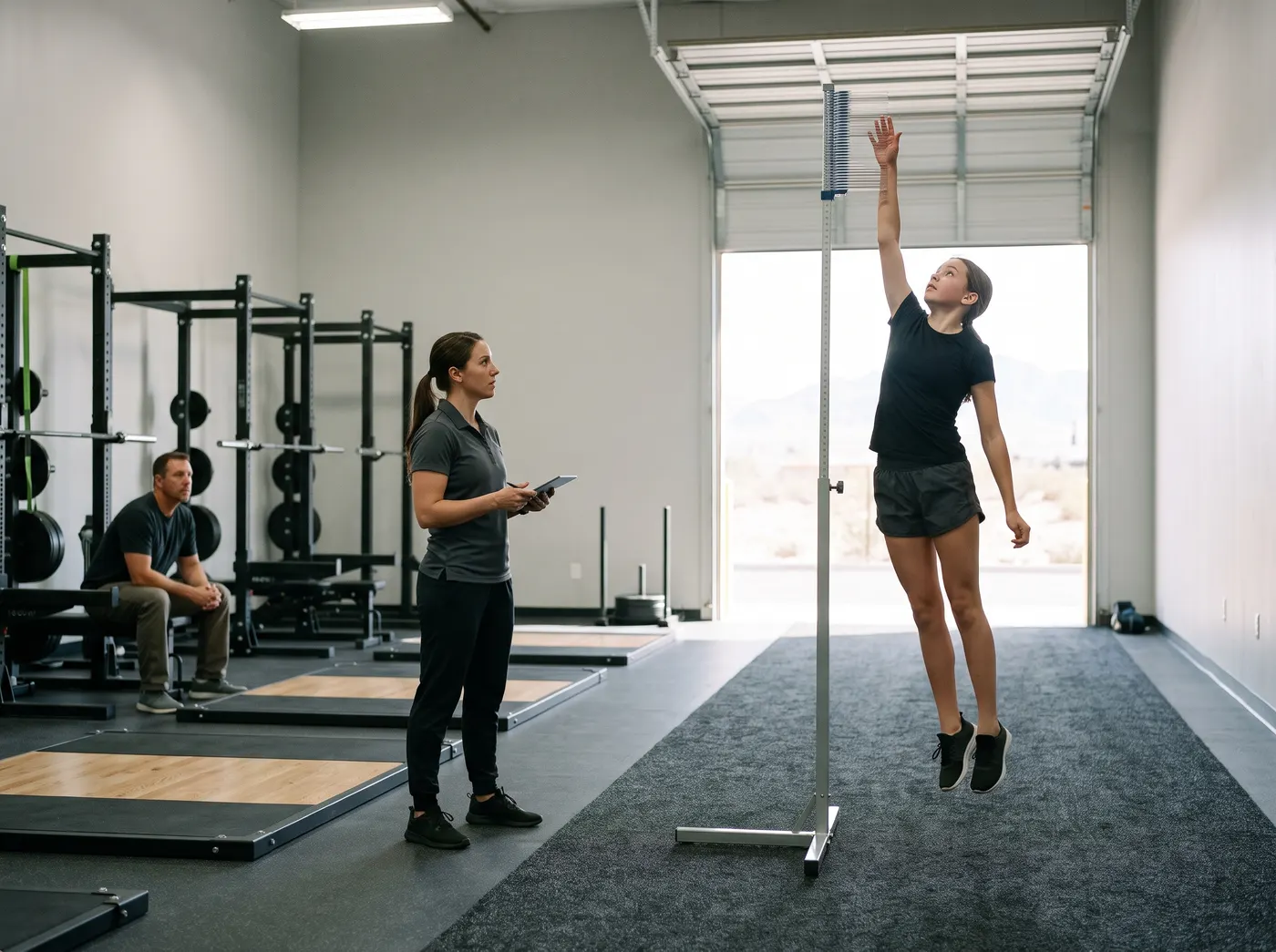
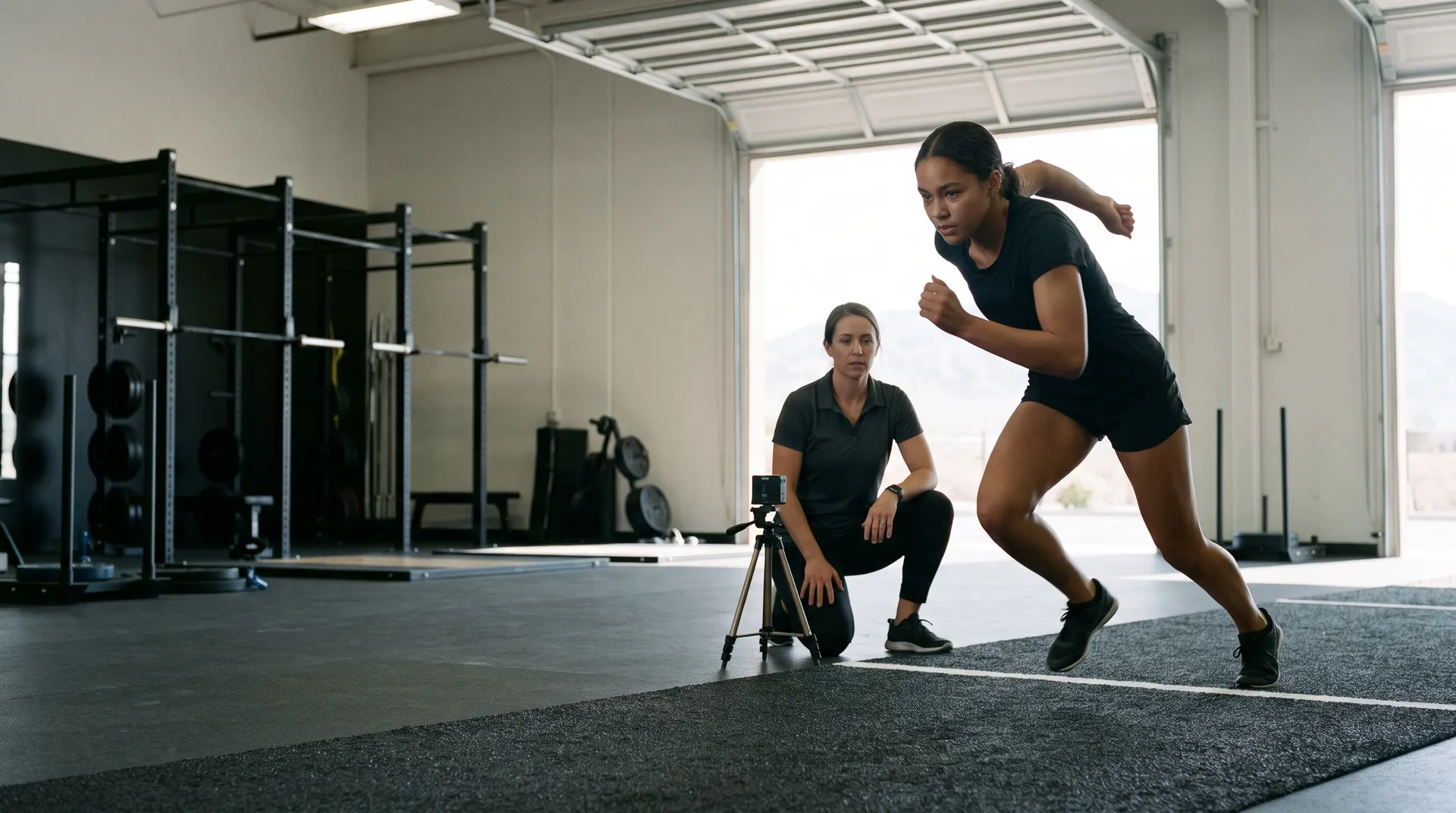
Most sprints in field and court sports cover less than 20 yards. Athletes frequently need to build speed over a short distance rather than reach their maximum running speed. That makes acceleration an important part of performance training.
Understanding the drive phase
The drive phase is the opening portion of a sprint, when an athlete builds speed from their starting position. In sports played on a field or court, this initial acceleration often matters more than running at maximum speed.
We dedicate training time to the mechanics of those opening strides.
What coaches look for during acceleration
When teaching sprint mechanics, we pay attention to body angle, how the athlete pushes against the ground and how their arms move.
Coaches provide feedback during sprint exercises and adjust instruction according to the athlete’s current movement ability.
How strength and power support speed
Acceleration training involves more than practicing sprints. Strength and power exercises are also part of developing an athlete’s ability to produce force.
Speed is a trainable physical quality. Athletes develop it at different rates, which is why we adjust training to individual ability and experience.
How we measure short sprint performance
Our indoor sprint lane uses laser timing gates to record sprint times over 10 and 20 yards. These measurements establish an individual starting point during the Athlete Evaluation.
Members repeat the tests every eight weeks, giving coaches and athletes consistent measurements to compare over time.
Our Speed and Agility program serves athletes ages 12 and up. Begin with an Athlete Evaluation to establish your sprint measurements and receive a training recommendation.
General information for athletes and parents, not medical advice. Speak with your physician about any injury or health question.