Between school, practices, games and performance training, young athletes have plenty to manage. Sleep, hydration and recovery all affect how they approach their training. Parents can help by making these habits part of the athlete’s everyday routine.
Make sleep part of the training schedule
Start by looking at the athlete’s entire week, including school commitments, practices and games. Make room for a consistent bedtime rather than treating sleep as whatever time remains at the end of the day.
Encourage your athlete to keep a regular sleep routine during both the school week and weekends.
Build a consistent hydration routine
Encourage your athlete to drink water throughout the school day and bring a water bottle to every training session. Hydration deserves attention outside the gym as well as during exercise.
Packing water alongside training clothes and athletic shoes is a simple way to make preparation part of the daily routine.
Leave room for recovery during the season
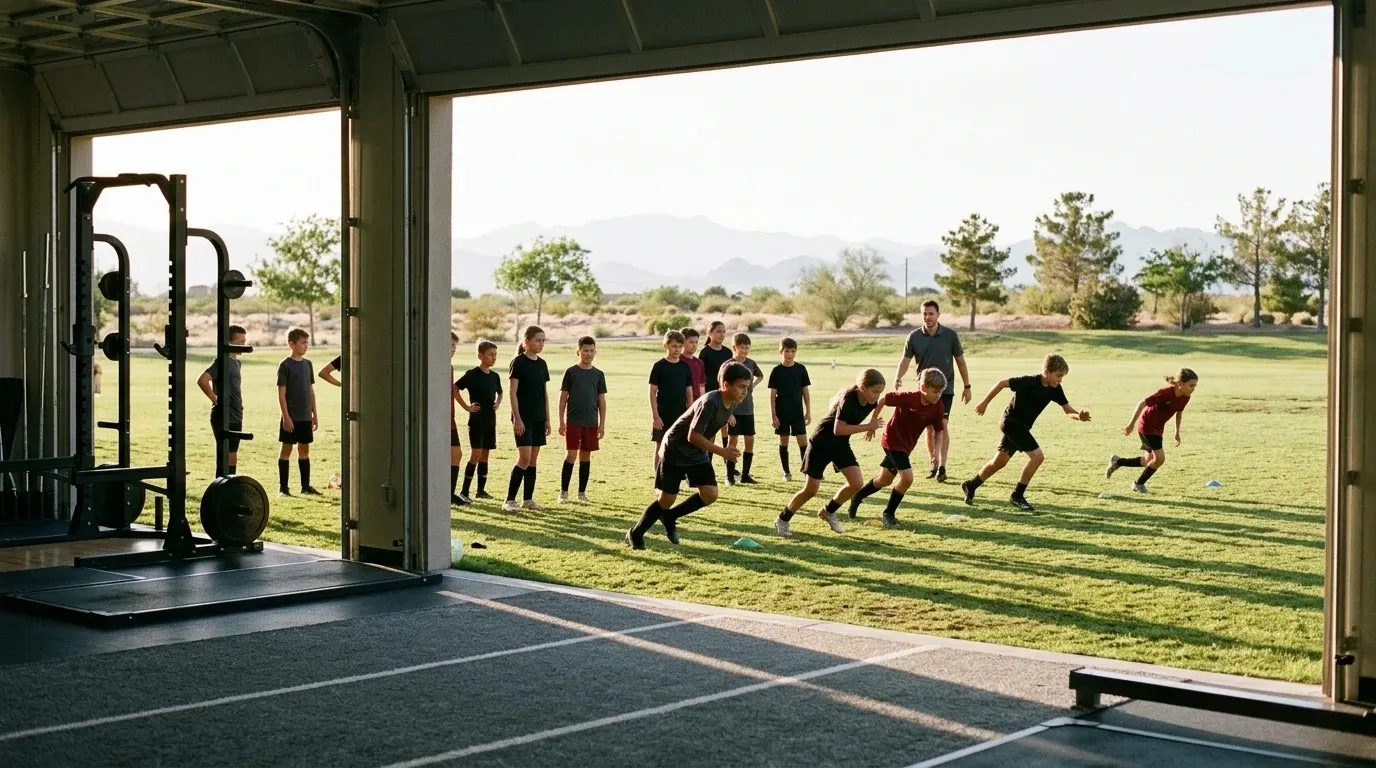
Performance training should account for the work an athlete already does at practices and games. During the competitive season, we generally recommend one or two weekly training sessions with reduced training volume.
Share the athlete’s sport schedule with their coach so training can be organized around existing commitments.
Pay attention to the final minutes of training
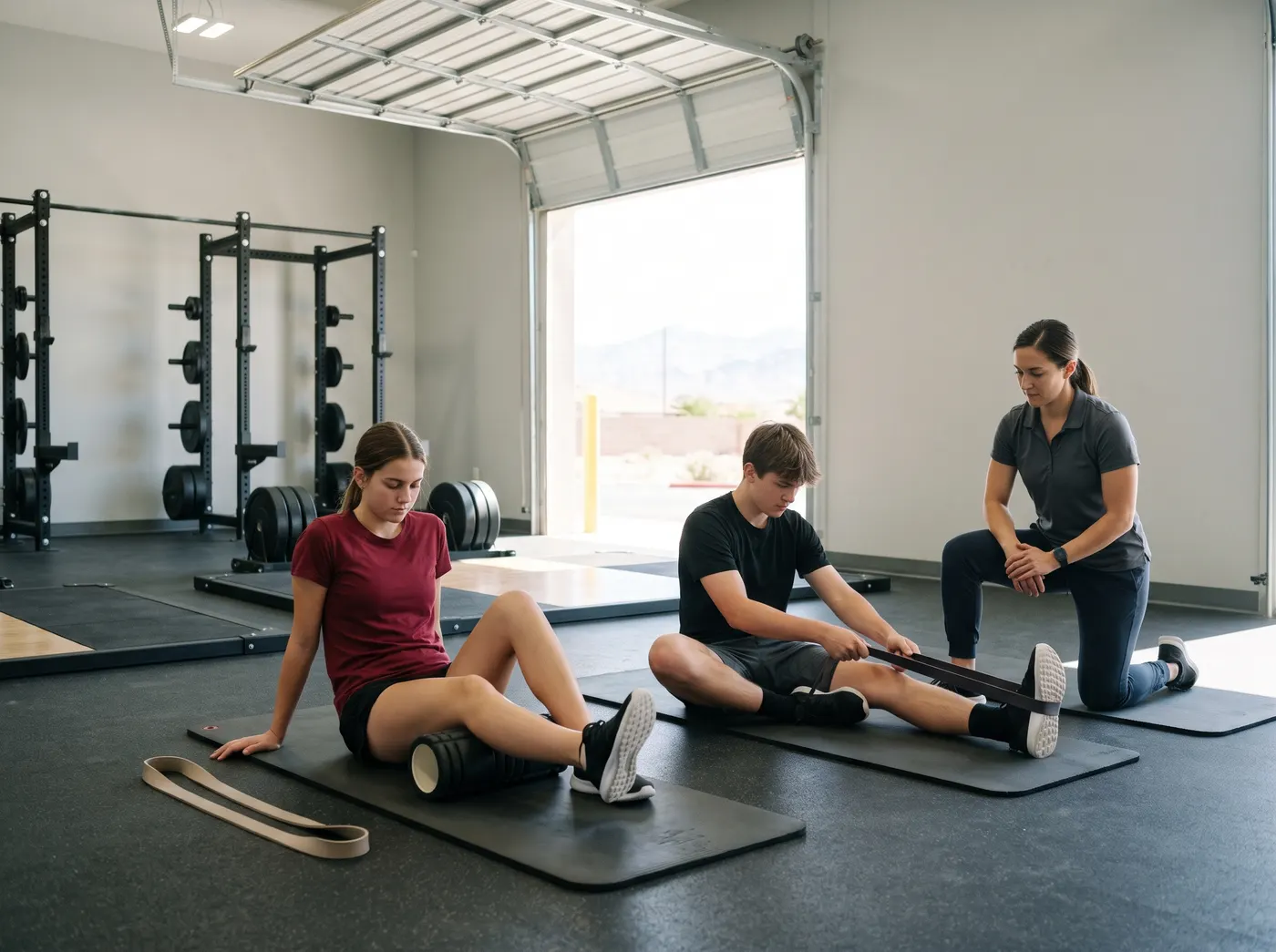
A typical session at Drive Phase Athletics finishes with five minutes of mobility work and coach feedback. This gives athletes time to complete their session and discuss their training with their coach.
Encourage your athlete to listen to that feedback and ask questions. These recovery suggestions are general training guidance, not medical advice.
Our Small Group Training program accounts for each athlete’s sport, season and training level. Start with the Athlete Evaluation to discuss a suitable weekly training schedule.
General information for athletes and parents, not medical advice. Speak with your physician about any injury or health question.